
Jonesboro, AR · Garage Door Service
Spring Repair for Bay's Mid-1970s Housing Stock
Bay's homes mostly date to the mid-1970s, a few years ahead of the wider Jonesboro service area's 1980 median. That gap changes which springs fail and how. We cover Bay from Jonesboro, 9 miles out.
- Repairs & new doors
- Springs & openers
- Serving 5 nearby communities
Why It Happens Here
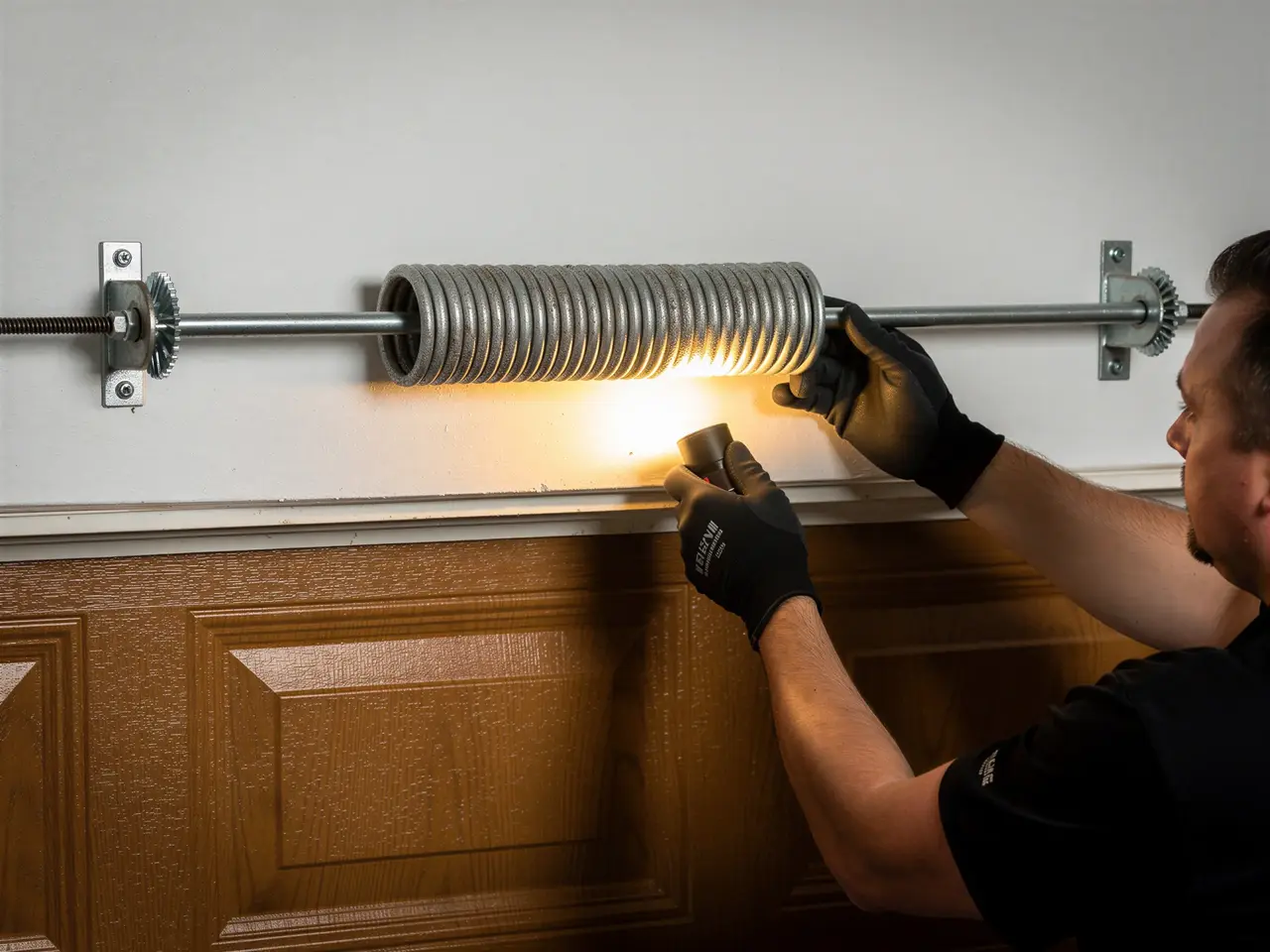
Jonesboro's service area as a whole centers on houses built around 1980, but Bay's own stock skews a bit older, with a median build year of 1976. That four-year gap matters more than it sounds. Doors and spring systems installed in the mid-70s came before a lot of the torsion-spring standardization that shows up in houses built even five or six years later. If your house in Bay still has its original door hardware, you're more likely running an older-style torsion setup, or in some cases a mismatched replacement spring put on sometime in the 80s or 90s when the original failed and nobody matched it to the door weight.
We also work in a cold-moderate climate band here, which means steel springs go through a real annual temperature swing - not brutal, but enough to work-harden the metal over decades. A spring that's been cycling since the mid-1970s has seen forty-plus winters of that contraction and expansion. That's the actual mechanism behind most of the spring failures we see coming out of Bay: not a single big event, just age plus a climate that never lets the metal sit still.
Bay is a smaller, tighter community than the rest of the area we cover - about 882 households, versus close to 21,000 across the whole service territory. Fewer houses means fewer of any given hardware style, which is part of why we ask what year your door went in before we guess what spring it's carrying.
What Can Go Wrong
On a standard torsion setup, the spring itself snaps - usually at a coil near the stationary cone, usually with a bang loud enough to bring you into the garage. That's the obvious failure. The less obvious one is a spring that's still intact but has lost tension slowly over years, so the door gets heavier and heavier to lift by hand before it finally won't move at all. Older extension-spring systems, more common on houses from the mid-70s build era, fail differently: the spring stretches out of shape, or one of the safety cables that's supposed to contain it is missing entirely because nobody retrofitted it after the fact.
We also see cones and end bearing plates that have worn oval instead of round, which isn't a spring problem exactly but gets blamed on the spring because that's where the noise comes from. And on doors that have had one spring replaced at some point without replacing its match, you get an imbalance - the opener strains on one side, which eventually takes out the opener gears or the drive cable, not just the spring.
One honest limit: if the door itself is warped, rusted through at the bottom panel, or the track is bent beyond adjustment, a new spring won't fix the actual problem. We'll tell you that straight rather than sell a spring job on a door that needs replacing.
What You Are Seeing
A door that won't budge, or budges only a few inches and stops, is the classic broken-torsion-spring symptom. If you pull the emergency release and the door drops fast or feels like dead weight, the spring has let go. A door that closes unevenly, dropping faster on one side, usually means one spring on a two-spring system has failed while the other is still holding - don't keep running the opener on that, it stresses the opener motor and the remaining spring.
A loud bang from the garage with no visible damage afterward is almost always the spring itself breaking, not the door falling. If the door is just getting harder to lift by hand, month over month, that's slow tension loss rather than a sudden break, and it's worth having looked at before it goes all the way.
Given Bay's older housing stock, we also watch for the signs of a mismatched or improvised repair from years back - a spring that's visibly a different gauge or length than its partner, or added-on safety cables that weren't part of the original install. None of that is unusual for a house from this era; it's just worth flagging before we quote a fix.
Getting It Booked In
We run jobs into Bay from our Jonesboro base, about 9 miles out. There's no local branch here, so we schedule the visit before heading over rather than trying to cover it on short notice - tell us the symptom (won't lift, dropped fast, uneven close) and roughly how old the door or opener is, and we'll bring the right spring sizes instead of guessing on site.
With Bay's median household income running close to $58,000, somewhat above the wider service area's $54,063, we still price the job the same way everywhere we work: by what the door and spring system actually need, not by zip code. We'll give you that number before any work starts, not after.
If you're not sure whether what you're dealing with is the spring or something else on the door, start with the area page below or go straight to the main spring repair write-up for the full rundown of how the job itself works.
Frequently asked questions
Why does my spring keep failing when the house isn't that old?
Most houses in Bay date to around 1976, which puts them a few years ahead of the wider Jonesboro-area median of 1980. Springs from that era have had roughly forty years of seasonal cycling in our cold-moderate climate, which work-hardens the steel. It's less about the house being old and more about decades of temperature swings wearing on the coil.
Do you have a crew based in Bay?
No. We're based in Jonesboro and drive out to Bay, about 9 miles, for each job. We don't keep a local branch here, so we book the visit ahead rather than offering same-day drop-ins.
How do I know if it's the spring or the opener?
If the door won't lift by hand with the opener disconnected, it's almost always the spring. If the opener runs but the door doesn't move, or moves and reverses, that's more likely the opener or the drive mechanism. We check both before quoting.
Can one spring be replaced without touching the other?
On a two-spring door, we generally recommend replacing both even if only one broke, since the surviving spring is usually close behind on age. Mismatched spring ages put uneven strain on the opener and the door itself.
Book garage door service in Jonesboro
Call now or request a quote - tell us what the door is doing and where you are.