
Jonesboro, AR · Garage Door Service
What Cold Weather Does to a 1980s Jonesboro Garage Door Pros
Jonesboro homes built mostly between 1969 and 2002 carry hardware that wasn't built for today's cold snaps. Here's what actually goes wrong and why.
- Repairs & new doors
- Springs & openers
- Serving 5 nearby communities
What Most People Get Wrong
Most Jonesboro homeowners figure a garage door spring breaks because it's old, full stop. Age is part of it, but the bigger factor is the hardware era. The service area's housing stock went up mostly between 1969 and 2002, with the median build year sitting around 1980, and most of the nine named areas we work in are full of 1980s and 90s construction. That means a lot of torsion springs, tracks, and openers out there were spec'd for a door that's now 30 to 50 years old, running on steel that's spent decades expanding and contracting with the seasons. People treat a stuck door in January the same as a stuck door in July. They're not the same problem. Cold steel behaves differently than warm steel, and a spring or roller that's been fine all summer can seize or snap the first hard cold snap of the year. The other mistake is assuming a quick lube job fixes everything. On hardware this age, lubrication helps, but it doesn't fix a spring that's lost its temper over 40 winters or a track that's been slowly bending out of plumb since the Reagan administration.
The Problem
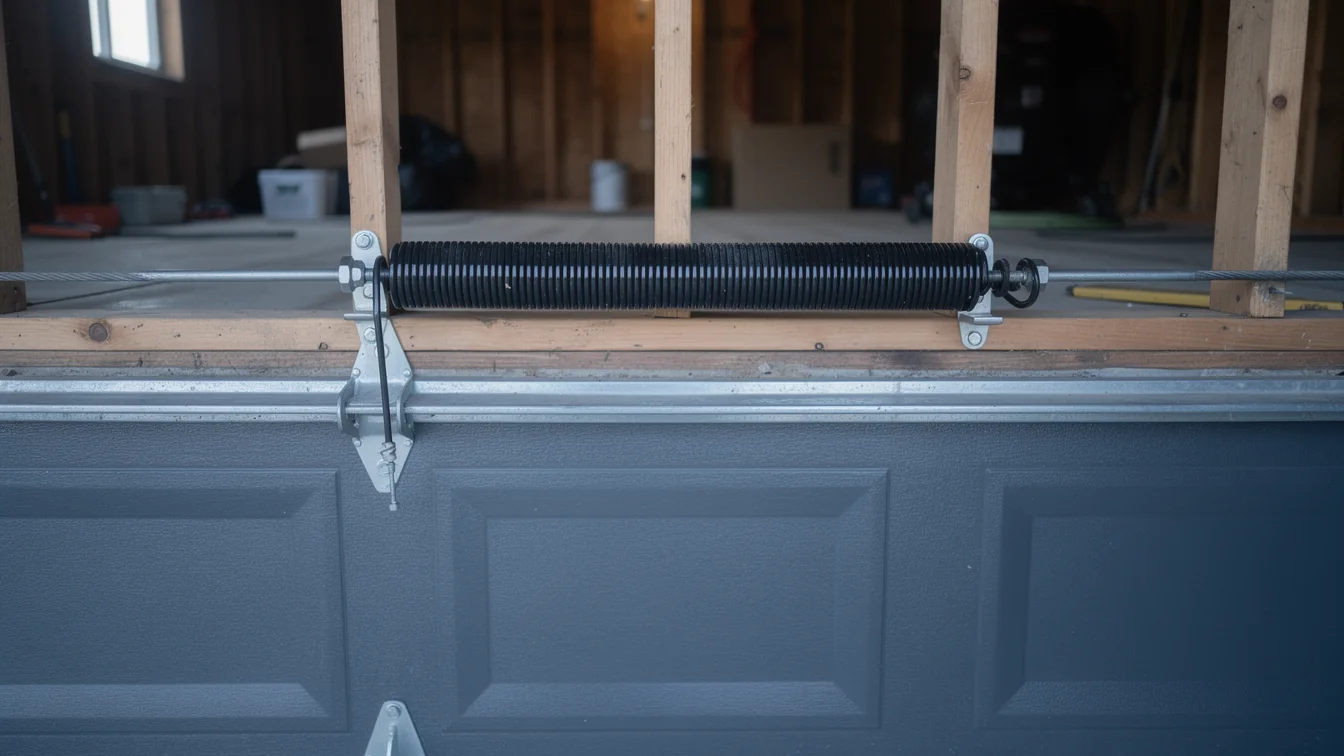
When a spring goes in cold weather, it's almost never a surprise to the metal - it's a surprise to the homeowner. A torsion spring that's been wound and unwound for several thousand cycles since the 1980s has already lost a chunk of its working tension. Cold temperatures make the steel more brittle and less forgiving right at the moment it's under the most load, which is why failures cluster hard in the coldest stretch of the year rather than spreading out evenly. Add in that this area's climate band is cold-moderate, meaning real freeze cycles but not the extreme sustained cold of the upper Midwest, and what you get is hardware that freezes and thaws repeatedly rather than staying locked at one temperature. That freeze-thaw cycling is harder on old grease, old bearings, and old spring coils than a steady deep freeze would be. On a door original to a house built in, say, 1985, that's close to four decades of this cycling with no replacement. The rollers and cables on a door that age are usually original too, and they don't fail quietly - they fail at 6am when it's 28 degrees and someone's trying to get to work.
What Local Conditions Do
The nine areas we cover share the same basic story: a lot of houses built in a 30-year window centered on 1980, sitting under a climate that swings into real cold and back out again multiple times a winter. That combination matters more than either fact alone. A door in a warm climate with 1980s hardware mostly just has old hardware. A door in a brutally cold climate gets replaced or upgraded out of necessity sooner. Jonesboro sits in between - cold enough that steel contracts and grease stiffens, mild enough that a lot of original 1980s and 90s doors never got swapped out because nothing forced the issue. That's how you end up with so many original torsion springs and steel tracks still in service on houses pushing 40 to 50 years old. Garages here aren't heated the way living space is, so the door hardware takes the full swing of outdoor temperature with none of the buffering a heated space would give it. That's the mechanism behind most of the cold-weather calls we get - not a single bad part, but original-era hardware finally meeting the one season it wasn't built to outlast forever.
Doing Nothing For Now
Not every noisy door needs a same-week call. If your door is from the 1980s or 90s stock common across this area and it's just gotten a little louder or slower to close as it's gotten colder, that can genuinely wait until a non-emergency slot opens up, especially outside the coldest weeks. What can't wait is a door that's already binding, a spring that's visibly gapped or twisted, or cables that look frayed - those are the setups for a sudden failure, and they tend to fail at the worst possible moment, which in this climate is usually the coldest morning of the stretch. We won't tell you to replace a 40-year-old torsion spring that's still working fine just because of its age; plenty of original springs are still doing their job. But we also won't pretend a door that age doesn't need a look before the next cold snap. If you're not sure which category yours falls into, that's a fair thing to ask us rather than guess.
Frequently asked questions
Why do garage door springs break more in winter in Jonesboro?
Most of the housing stock here dates to the 1969-2002 window, so a lot of torsion springs are original and already worn. Cold steel is more brittle and less flexible than warm steel, and this area's cold-moderate climate means repeated freeze-thaw swings that stress old coils more than a steady temperature would.
Is my 1980s garage door too old to repair instead of replace?
Not automatically. A lot of doors built when this area's median housing was going up, around 1980, still run fine with a spring or roller swap. We look at the track, the panel condition, and the opener before saying replace - age alone isn't the deciding factor.
Can a slow or noisy door wait until spring?
Often yes, if it's just sluggish and not binding or grinding. But a door that's already gapping at the spring or showing frayed cable shouldn't wait, since those setups tend to fail on the coldest mornings rather than gradually.
Related garage door services in Jonesboro
More garage door guides
Book garage door service in Jonesboro
Call now or request a quote - tell us what the door is doing and where you are.