
Jonesboro, AR · Garage Door Service
Opener Repair for Jonesboro's 1970s-2000s Housing Stock
Opener repair for Jonesboro-area homes built mostly between 1969 and 2002, where cold winters and aging drive systems cause the same handful of failures again and again.
- Repairs & new doors
- Springs & openers
- Serving 5 nearby communities
Why It Happens Here
Most of the housing in the Jonesboro service area went up between 1969 and 2002, with the median build year landing around 1980. That means a huge share of the openers out there are second or third units installed in garages that were framed for an entirely different kind of door hardware than what gets sold today. Across the nine named areas that make up this stock, the pattern repeats: a chain or belt drive unit from the 80s or 90s, a logic board that's outlived its warranty by decades, and a drive gear worn down from thousands of cycles.
Layer the climate on top of that. This area sits in a cold-moderate band, which means openers see a real swing between summer heat in the garage and winter cold snaps that stiffen grease, shrink gaskets, and make aging capacitors fail right when you need the door open most. A unit that's run fine for fifteen years will often pick the first hard cold stretch to finally quit, because that's when every marginal part gets tested at once.
We're not talking about a freak event. We're talking about ordinary wear meeting an ordinary winter in houses that are, on average, old enough to be on their second opener already.
What You Are Seeing
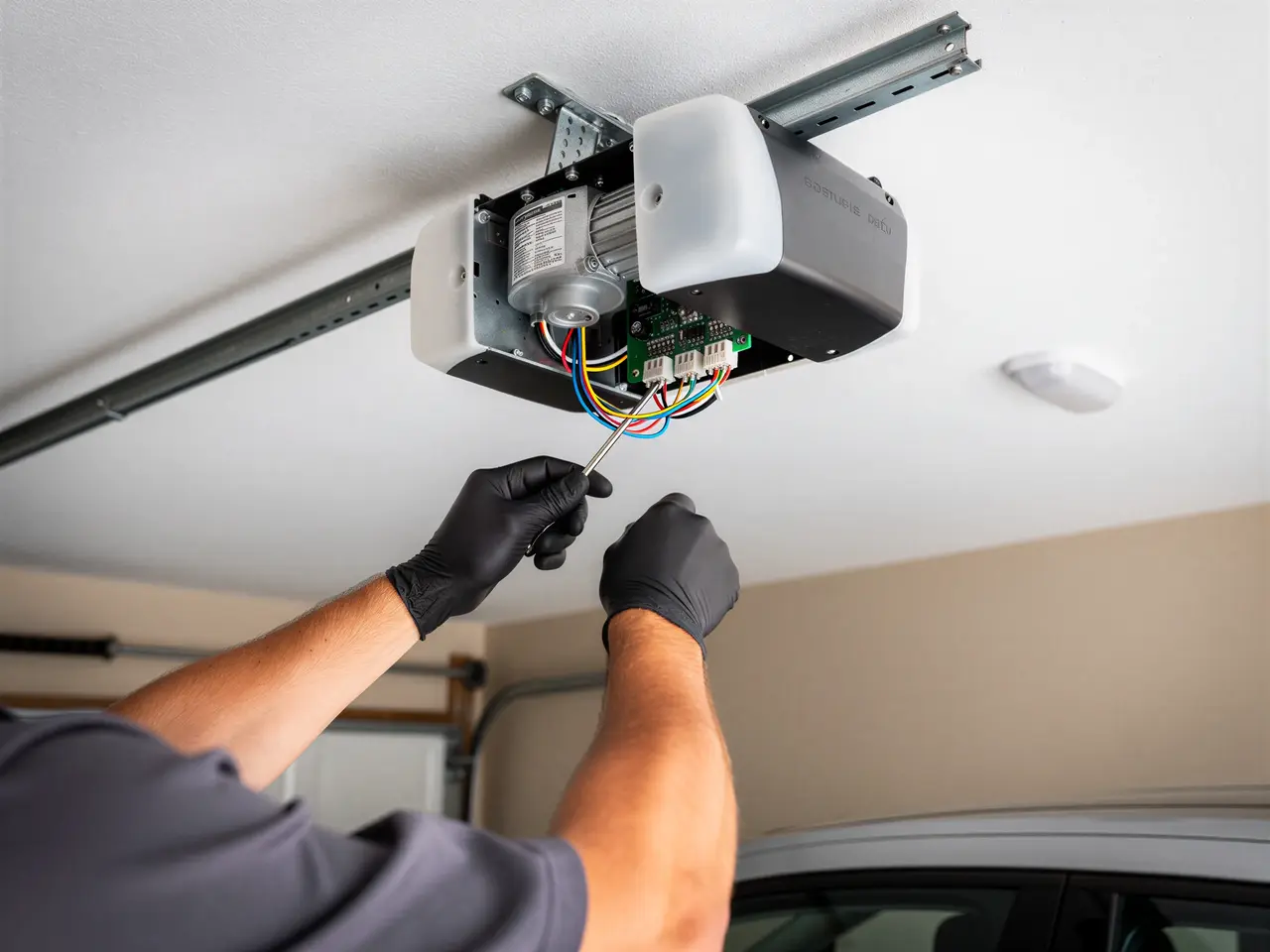
The most common call is a door that reverses before it closes, or won't close at all - usually a safety sensor knocked out of alignment, or a logic board losing track of its own travel limits as components age. Right behind that: a motor that hums but doesn't move the trolley, which on these older chain-drive units almost always means a stripped nylon drive gear. It's a known weak point on units from this era and a cheap part, but it takes the housing apart to get to.
You'll also hear openers that grind or slam at the end of travel. On belt and chain drives installed in the 80s and 90s, that's usually the trolley carriage cracking or the chain stretching past adjustment. And on the electrical side, remotes that work intermittently or not at all often point to a receiver board that's taken enough small voltage spikes over the years to start failing - common in houses with older wiring and no surge protection on the circuit.
None of these are dramatic failures. They're slow ones, and they tend to show up together because the parts age at the same rate.
How Long It Takes
Most opener repairs - sensor realignment, drive gear replacement, trolley repair, remote and receiver swaps - are diagnosed and fixed in a single visit. The part that takes longer is figuring out which failure you actually have, since a dead opener can look identical whether the problem is the gear, the board, or the sensors, and guessing wrong wastes a trip.
Where it stretches out is logic boards on older or less common opener models. If the board itself has failed rather than a mechanical part, we sometimes have to source a replacement board specific to that unit, and that's not always sitting on the truck. For houses built in the 1970s and 80s still running their original-era opener, this is more common than you'd think, simply because the unit has had decades to wear out every part in sequence.
If a board is unavailable or costs close to what a new opener runs, replacement usually makes more sense than chasing parts for a unit that age. That's a judgment call we make on site, not a sales pitch.
The DIY Question
Some of this you can check yourself before calling anyone. Safety sensors are two small eyes near the floor on each side of the track - if they're knocked out of alignment or something's blocking the beam, the door won't close, and realigning them is a five-minute fix with no tools. Dead remote batteries are the other easy one, and worth ruling out first.
Past that, we'd tell you to stop. Opener logic boards carry line voltage, and the spring-loaded components near the header are under real tension - not a place to learn by trial and error. Diagnosing whether a quiet motor means a stripped gear versus a seized capacitor takes pulling the housing and testing with a meter, and guessing wrong can turn a $40 part into a cracked housing or a burned-out motor.
Our honest limitation here: we don't carry every board for every opener brand and year on the truck, especially for units old enough to match this area's housing stock. If yours needs an order-in part, we'll tell you that up front rather than stringing out a visit.
Frequently asked questions
Why does my opener only act up in the cold?
This area sits in a cold-moderate climate band, and cold stiffens the grease in the drive mechanism and can affect aging capacitors and circuit boards. An opener with marginal parts often runs fine most of the year and fails on the first hard cold snap, because that's when every weak component gets stressed at once.
My house was built in the 1980s - is my opener probably original?
Not necessarily, but houses in that build range have usually had at least one opener replacement by now. A lot of the units we see failing are second-generation openers from the 80s and 90s rather than the original factory unit, which means drive gears and boards are already well past their expected service life.
Can you fix any opener brand?
We work on the drive systems and boards common across this area's housing stock, but we don't stock every board for every brand and model year on the truck. If yours needs an order-in part, we'll tell you that at diagnosis rather than after the fact.
Is it ever cheaper to replace than repair?
Yes, usually when the logic board has failed on an older unit and a replacement board costs close to what a new opener runs. At that point we'll say so directly - there's no reason to chase parts for a unit that's already at the end of its service life.
Book garage door service in Jonesboro
Call now or request a quote - tell us what the door is doing and where you are.