
Jonesboro, AR · Garage Door Service
Garage Door Repair for Lake City's 1980s Housing Stock
Lake City homes mostly date to 1982, right when doors shifted from extension springs to torsion. We drive out from Jonesboro to fix what that era left behind.
- Repairs & new doors
- Springs & openers
- Serving 5 nearby communities
Parts We Carry
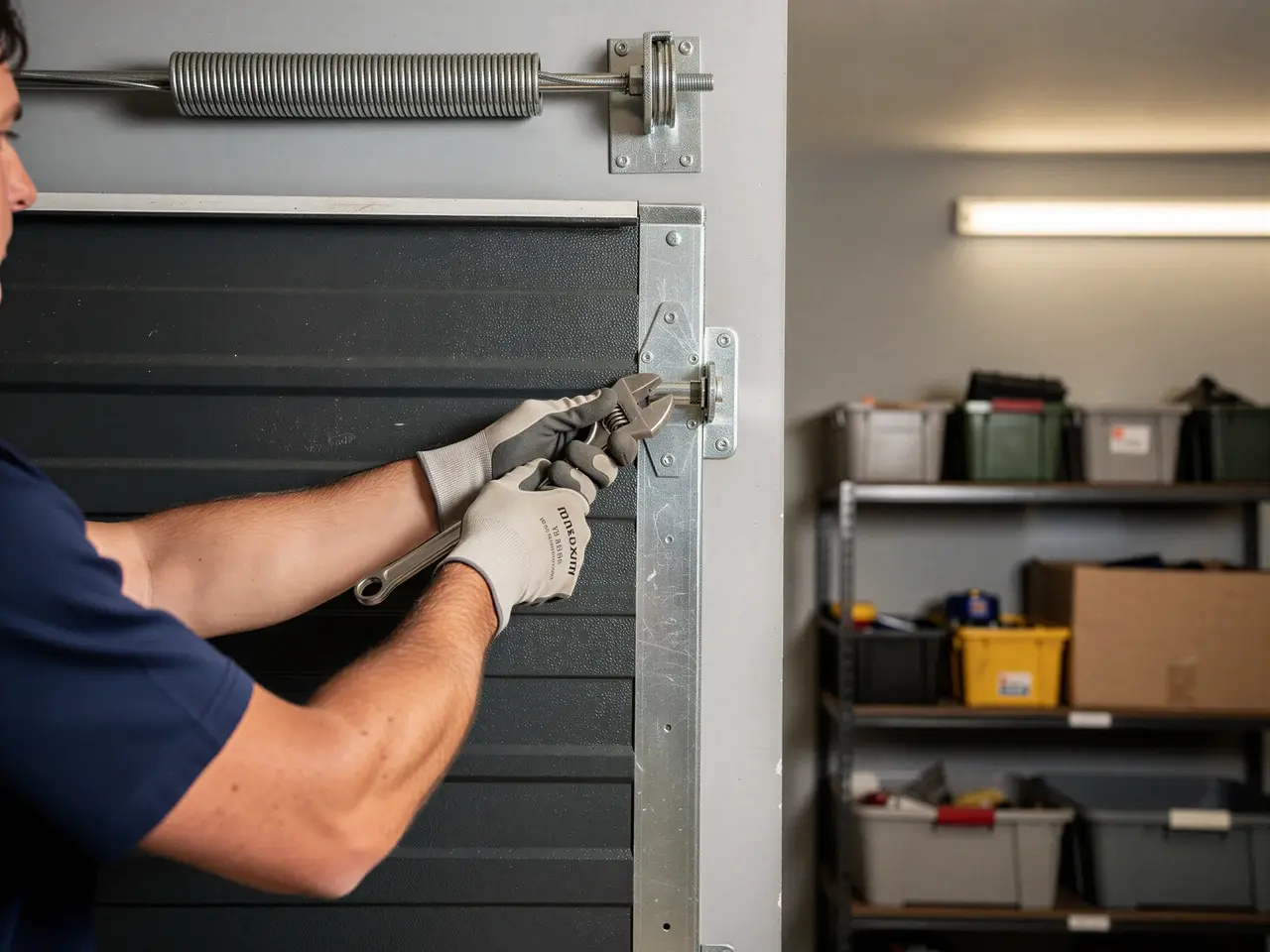
Lake City's median home dates to 1982, which puts most garages here in that awkward stretch when builders were switching from extension springs mounted along the horizontal track to torsion springs on a shaft above the door. We carry both, plus the rollers, end bearing plates, and galvanized lift cables that wear out on either setup. A lot of these doors are single-layer steel with no foam backing, so the panels dent easier than anything built in the last twenty years and the weatherstrip at the bottom has usually given up by now. What we don't stock on the truck is oddball panel sections for doors wider or narrower than the standard runs - if a 1980s custom-width door needs one replacement panel instead of a full door, that part sometimes has to be special-ordered, and we'll tell you that up front rather than make you wait on a truck that doesn't have it. Openers from this era, where they survive, are usually chain-drive units long past any useful lifespan, and we carry modern replacements rather than hunting for parts to keep a 40-year-old motor running.','placeholder'
How We Fix It
We start by figuring out whether the complaint is a spring, a track, or the opener, because on a door this age those three things fail independently and for different reasons. Extension springs stretch and lose tension gradually, so a door that used to fly up now needs a shove - that's a spring swap, done in pairs even if only one side looks stretched. Torsion setups from the later part of the 1980s fail more abruptly, usually with a bang, and that's a job where we unload the tension with winding bars before touching anything, not a job for guesswork. Track misalignment shows up as a door that binds partway up, and nine times out of ten on a house this old it's because the track brackets have loosened from decades of the door slamming against worn bottom brackets. We check cable fray, roller wear, and hinge play as part of any call, because fixing a spring while ignoring a frayed cable just means a second trip. We travel out from Jonesboro for these calls, so we try to diagnose as much as possible over the phone before we load the truck, which saves you a wasted visit if the fix is simpler than it sounds.
The DIY Question
A torsion spring holds enough stored tension to break a wrist or worse, and that doesn't change because the house is older or the door looks simple. If your door won't open and you can see a spring is broken or stretched past shape, that's not a weekend project - leave it. Where homeowners can reasonably handle things themselves: lubricating hinges and rollers, tightening loose bolts on track brackets you can reach safely, and clearing debris from the track. On a 1982-era door, one thing worth checking yourself before calling anyone is whether the opener's safety reversal still works - push something in the door's path and see if it stops and backs up. A lot of original openers from this build era predate that safety feature entirely, and if yours doesn't reverse, that's worth a call regardless of what else is wrong. We'd rather tell you what's safe to try than have you find out the hard way what a 40-pound spring under tension can do.
How Long It Takes
Most spring and cable jobs on a door from this era run under two hours once we're on site - the hardware is straightforward and we're not fighting a design we don't carry parts for. What takes longer is anything involving a bent track from decades of use, or a full door replacement if the panels are too far gone to patch, since measuring and ordering a new door isn't a same-visit job. Because we're covering Lake City from Jonesboro, about 13 miles out, we build the drive into how we schedule the day rather than treating it as a drop-in stop between closer jobs like Brookland or Bono. That means we're straightforward about which day we can get to you rather than promising a same-hour arrival we can't back up from that distance. If a part isn't on the truck - an odd-width panel or a specific opener gear kit - that adds a return trip, and we'll tell you at diagnosis if that's likely rather than let it surprise you.
What You Pay
We don't post a flat number here because the cost difference between a roller replacement and a full spring-and-cable job is real, and quoting one price for both would be misleading. What does shape the estimate in Lake City specifically is the age of the hardware - torsion conversions on houses still running original extension springs cost more up front than a straight spring swap, but they hold up better over time. Median household income here runs around $57,449, a bit above the wider service area's $54,063, which is one reason we'll walk through repair-versus-replace honestly rather than steer everyone toward the most expensive fix. For a door with surface rust and a few dents but sound springs and track, repair makes sense. For a door where the panels are buckled and the track is bent from age, a new door often costs less over five years than patching a dying one piece at a time. We'll give you both numbers before we start.
What You Are Seeing
If your door is loud going up - a grinding or popping sound rather than a smooth roll - that's usually worn rollers or a track that's drifted out of alignment, both common on doors installed when Lake City's housing stock went up around 1982. A door that sags on one side when it's down points to a stretched extension spring on that side, not something a track adjustment will fix. If the door reverses on its own partway down for no visible reason, check the photo-eye sensors first since those get added or retrofitted on older setups and go out of alignment easily. The service area sits in a cold-moderate climate, and a door this age with no insulation layer will show more visible warping and gap at the bottom seal in winter than a newer insulated door would, which is worth knowing if you're deciding whether to repair or finally replace. Cracking or peeling paint along the bottom panel is usually moisture getting in through a worn weatherstrip, not a structural problem on its own - but left alone long enough it becomes one.
Frequently asked questions
Why are so many Lake City garage doors still running extension springs instead of torsion?
Lake City's housing stock centers on 1982, right in the window when builders were transitioning between the two systems. Extension springs were cheaper and still common through the early 80s, so a lot of original doors here never got upgraded. Both systems work fine when maintained, but extension springs wear differently and need checking more often.
Do you have a shop in Lake City?
No. We're based in Jonesboro and drive out to Lake City, about 13 miles each way, for every call. We don't keep a branch or depot here, which is why we ask a few questions up front to bring the right parts the first trip.
Is it worth replacing a 1982 door instead of repairing it?
Depends on what's actually wrong. A door with sound panels and just a worn spring or roller is almost always cheaper to repair. One with buckled panels, a bent track, and an opener past its life is usually cheaper to replace outright than to keep patching piece by piece.
More garage door services in Lake City
Book garage door service in Jonesboro
Call now or request a quote - tell us what the door is doing and where you are.