
Jonesboro, AR · Garage Door Service
Roller Replacement for Paragould's 1990s Garage Doors
Paragould homes built around 1990 mostly still run original steel rollers. We drive out from Jonesboro to swap them for sealed nylon, no new track needed in most cases.
- Repairs & new doors
- Springs & openers
- Serving 5 nearby communities
How We Fix It
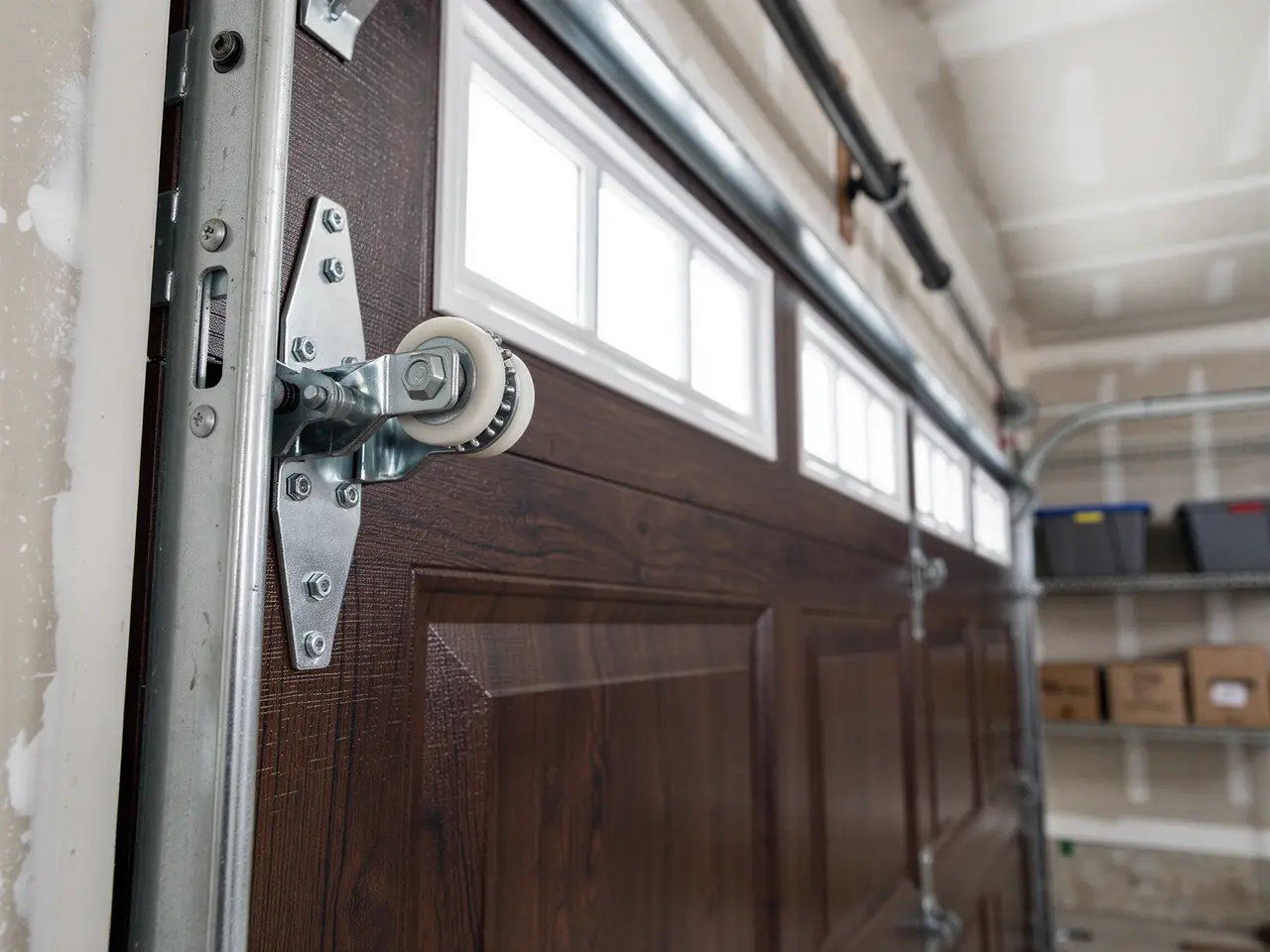
Most of the doors we see in Paragould went up around 1990, and that era of sectional door came standard with open steel rollers riding directly in galvanized track - no sealed bearing, no nylon tire. Thirty-plus years of that steel-on-steel contact wears a groove into the track and flattens the roller stem, which is why the door starts grinding instead of sliding. We pull the old rollers, check the track for the wear groove that steel rollers leave behind, and swap in sealed nylon rollers sized to the stem you've got. If the track itself is worn into a channel rather than a smooth curve, we'll say so before we quote - a new roller in a gouged track just wears out again fast. On most jobs the track is fine and it's purely a roller job: loosen the track brackets enough to slide the old roller out, drop the new one in, re-tighten. We don't touch springs or cables on a straight roller job unless you ask us to look.
What You Are Seeing
A door that used to glide now grinds, hesitates, or lets out a metal-on-metal screech partway up or down - usually worse on cold mornings, since steel rollers tighten up more than nylon when the temperature drops. You might also notice the door walking sideways slightly as it opens, hitting one side of the track before the other catches up. That's a flat spot on a steel roller wheel, not a bent track, most of the time. On original 1990-era hardware you'll sometimes find 7-ball or 10-ball steel rollers with no stem bearing at all - they were built to last the house, not to last forever, and thirty-plus years is a long run for any moving steel part riding in a steel channel with no seal against grit.
What You Pay
We don't post a flat rate here because roller count and roller type both move the number - a two-car door usually carries 10 to 14 rollers, and whether yours are the long-stem or short-stem style changes the parts cost. What we can tell you is this: if your track shows the worn groove that decades of steel rollers leave behind, that's a separate repair, not something a roller swap fixes on its own, and we'll quote it separately rather than bundle a guess into the roller price. We'll give you a number before anything comes off the door, based on what we count once we're looking at it, not before.
Parts We Carry
The truck carries sealed nylon rollers in the stem lengths that fit 1980s-90s steel sectional doors, which covers the bulk of what's on the road in this part of the service area. Nylon doesn't suffer the same cold-weather stiffening that steel rollers do, which matters here given the winters this region gets. What we don't stock on the truck is the oddball stuff - wood-door roller brackets, discontinued proprietary stems from a handful of manufacturers that don't make that hardware anymore. If your door turns out to need one of those, that part gets ordered and the job gets a second visit, which we'd rather tell you upfront than pretend otherwise.
How Long It Takes
A straight roller swap, once we're on site with the right size in hand, runs under an hour on a standard double door. The variable isn't the labor, it's the diagnosis - we take the time up front to check whether the track has worn into a groove from decades of steel rollers, because that changes the job. We travel to Paragould from Jonesboro, about 19 miles out, so the visit includes drive time; we don't keep a branch or depot in town, and we won't promise a same-day window just because the job itself is quick. Scheduling the visit is the long pole, not the wrench time.
Why It Happens Here
Housing in this part of the service area mostly dates to around 1990, which put steel rollers and open steel track on nearly every door that went up - a different starting point than the older, pre-1970s stock found elsewhere in the region, and a different failure pattern than you'd get from a door installed in the last ten years with factory nylon. With roughly 11,601 households here, that's a lot of garage doors that hit the same age and hardware wall around the same time. The region sits in a cold-moderate climate band, and steel rollers get noisier and stiffer as temperatures drop, which is why a lot of these calls come in during the colder months even though the wear itself built up gradually over thirty years.
Frequently asked questions
Do steel rollers always mean the track needs replacing too?
Not always. A lot of 1990s-era steel rollers wear down without gouging the track badly enough to need replacement. We check the track surface for a worn groove before quoting - if it's smooth, rollers alone usually solve it.
Will nylon rollers be noisier or quieter than my original steel ones?
Quieter, almost always. Sealed nylon rollers don't have the open steel-on-steel contact that your original 1990-era rollers have, and they don't stiffen up the same way in cold weather, which is usually when the grinding gets worse.
Do you keep a crew based in Paragould?
No. We run out of Jonesboro, about 19 miles away, and travel out for roller jobs and other repairs. There's no local depot, so scheduling the visit is the main time factor, not the repair itself.
How many rollers does a typical door need replaced?
Most two-car doors carry 10 to 14 rollers depending on panel count and design. We count yours on site before quoting rather than guessing a number over the phone.
Book garage door service in Jonesboro
Call now or request a quote - tell us what the door is doing and where you are.